Fiber Blends Explained: Reasons for Mixing Fibers in Clothing Fabrics
November 16, 2026 · 3-minute read
Many clothing labels list more than one fiber: 95% cotton and 5% elastane, 80% wool and 20% nylon, 55% linen and 45% cotton. Brands blend fibers to combine their properties, change how a fabric feels, or change how it wears and washes.
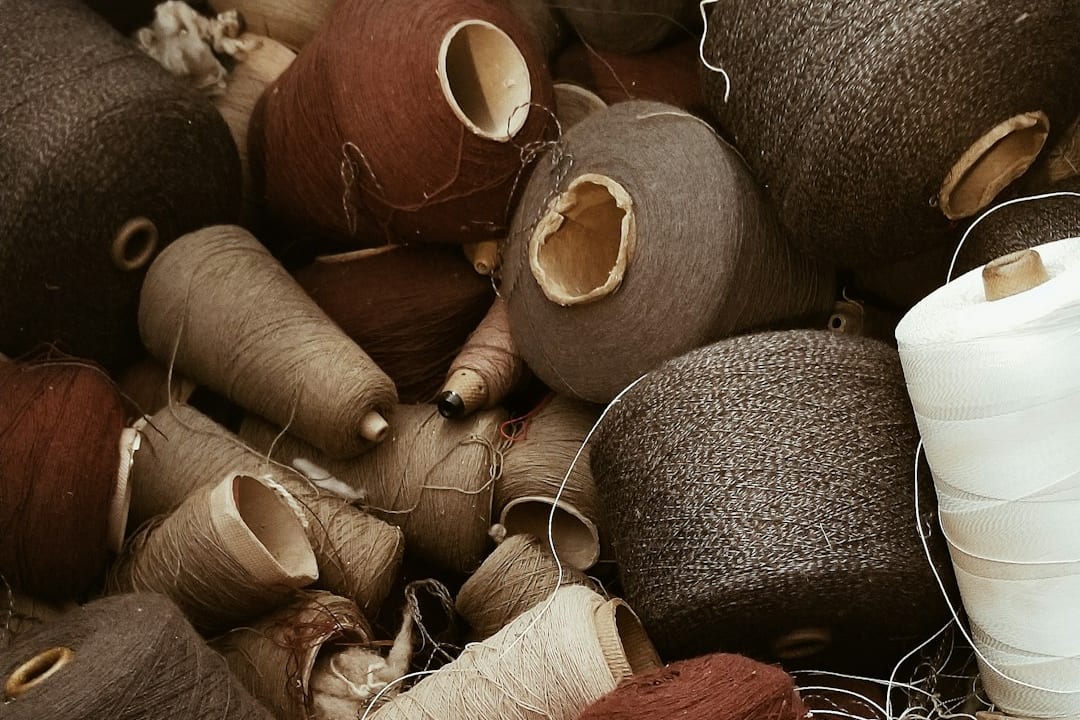
How Fibers Are Blended
Fibers can be combined at different stages. They can be mixed before spinning, so every strand of yarn contains both, and synthetic fibers can be cut into short staple fibers for this so they spin with cotton or wool.1 Yarns of different fibers can also be woven or knitted together, as in stretch denim, which often wraps cotton around a core of elastane. Finally, a garment can use different fabrics for different parts, such as a cotton body and a polyester lining, and the label then identifies each section separately.2
Common Blends and Why They Are Used
Cotton and Elastane
Elastane, called spandex in the United States, is a polyurethane fiber used for its highly elastic properties.3 A small amount, often a few percent, adds stretch and helps a garment return to its shape. It is common in jeans, leggings, fitted T-shirts, and underwear, and the fabric still looks and feels mostly like cotton.
Cotton and Polyester
Cotton and polyester blends are common in T-shirts, sweatshirts, and work wear. Polyester holds its shape and resists wrinkling and shrinking, while cotton adds softness, and blends such as 50/50 or 60/40 are typical. Polyester and cotton are the two most widely produced fibers in the world.4
Wool and Nylon
Nylon adds strength and abrasion resistance to wool. This blend is especially common in socks, where heels and toes take the most wear.
Wool and Cashmere
Cashmere fibers are finer than the best wools,5 so adding cashmere to wool gives a softer feel than wool alone at a lower price than pure cashmere.
Linen and Cotton
Linen has low elasticity, which makes it prone to wrinkling.6 Blending it with cotton keeps some of linen’s texture while softening it.
Viscose and Elastane
Viscose drapes softly, and elastane adds stretch. This blend is common in fitted dresses, tops, and knitwear.
Hemp and Cotton
Cotton softens hemp’s dry, textured hand, giving a fabric that feels closer to cotton with some of hemp’s character.
Reading a Blend on the Label
Labels list fibers by their percentage of the fabric’s weight, from the largest share to the smallest, so the first fiber listed is the main one.2 Even a small share can make a noticeable difference: 2% elastane changes how jeans fit and move, even though 98% of the fabric is cotton. For the full labeling rules, see How to Read a Clothing Fiber Content Label.
Filtering by Fiber Percentage
FiberScore lists only clothing with no synthetic fabrics on the label, so the blends you will find there are mixes of natural and plant-derived fibers, such as linen and viscose, wool and cashmere, or hemp and cotton. You can filter by how much of a fiber an item contains, for example cotton between 90% and 100%, in any listing’s Filter & Sort menu.
Examples on FiberScore include Jungmaven’s Original Tee in 55% hemp and 45% organic cotton, Naadam’s Luxe Cashmino sweaters in 90% wool and 10% cashmere, Rylee + Cru’s kids’ clothing in 55% linen and 45% viscose, and Mott & Bow’s Marcy Tees in 50% cotton and 50% modal.
References
Preston, J. (2022). Man-made fibre: Processing and fabrication. Encyclopaedia Britannica. https://www.britannica.com/technology/man-made-fiber/Processing-and-fabrication
Federal Trade Commission. (2014, updated 2025). Threading Your Way Through the Labeling Requirements Under the Textile and Wool Acts. https://www.ftc.gov/business-guidance/resources/threading-your-way-through-labeling-requirements-under-textile-wool-acts
Britannica Editors. (2026). Spandex. Encyclopaedia Britannica. https://www.britannica.com/technology/spandex
Textile Exchange. (2025). Materials Market Report 2025. https://textileexchange.org/knowledge-center/reports/materials-market-report-2025/
Britannica Editors. (2026). Cashmere. Encyclopaedia Britannica. https://www.britannica.com/topic/cashmere
Britannica Editors. (2026). Linen. Encyclopaedia Britannica. https://www.britannica.com/technology/linen