Knit vs. Woven Fabric: How Construction Changes Clothing
November 3, 2026 · 3-minute read
A cotton T-shirt and a cotton button-down shirt can be made of exactly the same fiber and still look, feel, and stretch completely differently. The difference is how the fabric is constructed: the T-shirt is knit, and the shirt is woven. Fiber content tells you what a fabric is made of, and construction tells you how it is put together.
The following is a summary of how woven and knit fabrics are made, the most common types of each, and what fabric weight means.
Woven Fabric
Woven fabric is made by interlacing two sets of yarns so that they cross each other, normally at right angles, usually on a loom. The lengthwise yarns are called the warp, and the crosswise yarns are called the weft, or filling.1 Because the yarns run straight, woven fabrics are stable and do not stretch much along the grain unless stretch yarns such as elastane are added. They tend to hold a crease and fray at a cut edge.
Common Weaves
The three basic weaves are plain, twill, and satin.1 In a plain weave, each filling yarn passes over and under the warp yarns, with the order reversed in alternating rows. Percale, muslin, and taffeta are plain weaves,1 and so are poplin, chambray, and most linen shirting. In a twill, the yarns interlace in a way that produces diagonal ribs across the fabric,1 as in denim, chino, and gabardine.
In a satin weave, the yarns float over several others before interlacing, giving a smooth, shiny surface, as in charmeuse and sateen. In a basket weave, one or more filling yarns pass alternately over and under two or more warp yarns,1 and oxford cloth is a variation of it.
Knit Fabric
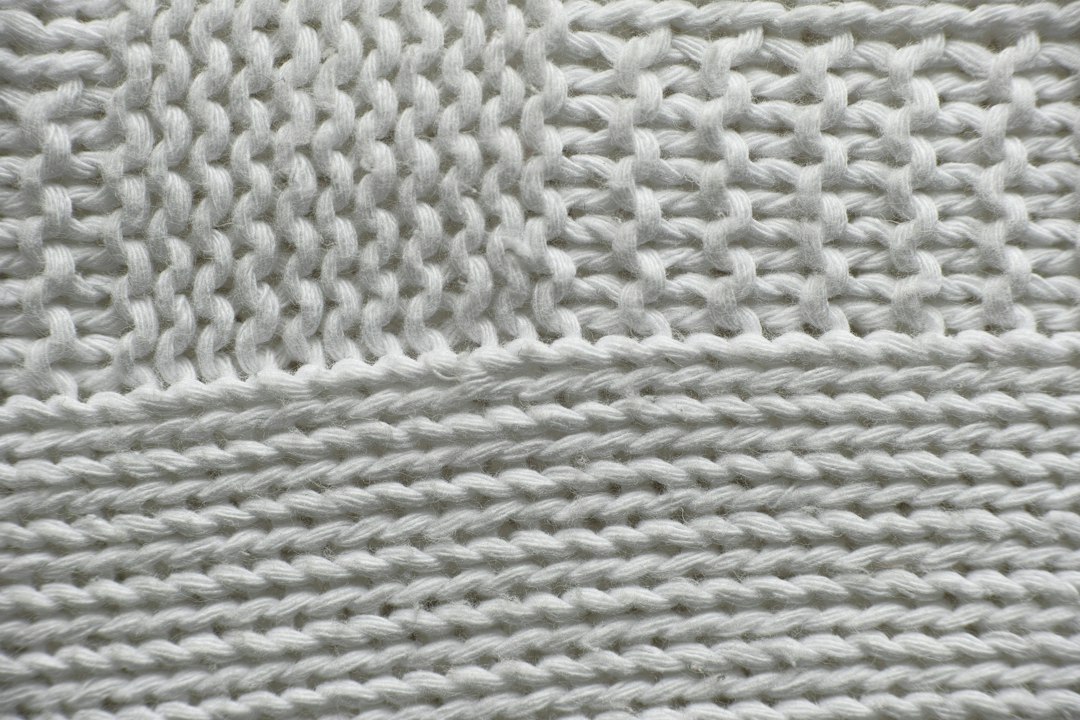
Knit fabric is made from a continuous yarn, or set of yarns, formed into a series of interlocking loops, and knit fabrics can generally be stretched more than woven ones. A column of loops running lengthwise is called a wale, and a crosswise row of loops is a course.2 There are two basic types of knits: weft knits, including plain, rib, purl, and double knits, and warp knits, including tricot and raschel. Most commercial knit fabric is made by machine.2
Common Knits
Jersey is a smooth, thin plain knit with V-shaped loops on the front, and most T-shirts are cotton jersey. Rib knit has raised vertical ridges that stretch widthwise and spring back, so it is used for cuffs, collars, and fitted tops. Interlock is a double knit that looks smooth on both sides and is often used for baby clothes and polo shirts.
French terry is smooth on the outside with small loops on the inside and is used for lightweight sweatshirts, while fleece is a knit brushed on the inside to raise a soft, fuzzy surface.
Sweaters are knit too, usually from thicker yarns, and are made in three main ways. Some are cut and sewn from knitted fabric like a T-shirt. Others are fully fashioned, with each piece shaped as it is knitted by adding stitches to widen it and knitting two stitches as one to narrow it, then joined.2 Whole-garment machines knit an entire sweater in one piece with no cutting and little or no sewing.3
Fabric Weight
Fabric weight is another way fabrics with the same fiber differ. It is usually given in grams per square meter (GSM) or ounces per square yard. A lightweight T-shirt might be around 140 GSM and a heavyweight one 220 GSM or more, and heavier fabrics feel thicker and more opaque.
Fiber and Construction Together
To know how a garment will feel, you need both pieces of information: what fiber it is made of, and how it is constructed. FiberScore shows every item’s fiber content, and product descriptions and photos often show whether it is a knit or a woven. Browse by fiber on the fiber pages, or read how to read a fiber content label.
References
Britannica Editors. (n.d.). Weaving. Encyclopaedia Britannica. https://www.britannica.com/technology/weaving
Britannica Editors. (n.d.). Knitting. Encyclopaedia Britannica. https://www.britannica.com/technology/knitting
Knitting Industry. (2009). Shima Seiki: WHOLEGARMENT. https://www.knittingindustry.com/knitwear/shima-seiki-wholegarment