Types of Cotton: Pima, Supima, Egyptian, and More
November 16, 2026 · 3-minute read
Cotton is simply “cotton” on a fiber content label, but product descriptions often go further: Pima, Supima, Egyptian, combed, ring-spun, mercerized. Some of these names describe the cotton plant, some describe where it was grown, and some describe how the fiber or yarn was processed.
For how cotton goes from the field to a finished garment, including organic growing and how certifications apply at each stage, see How Cotton Becomes Clothing.
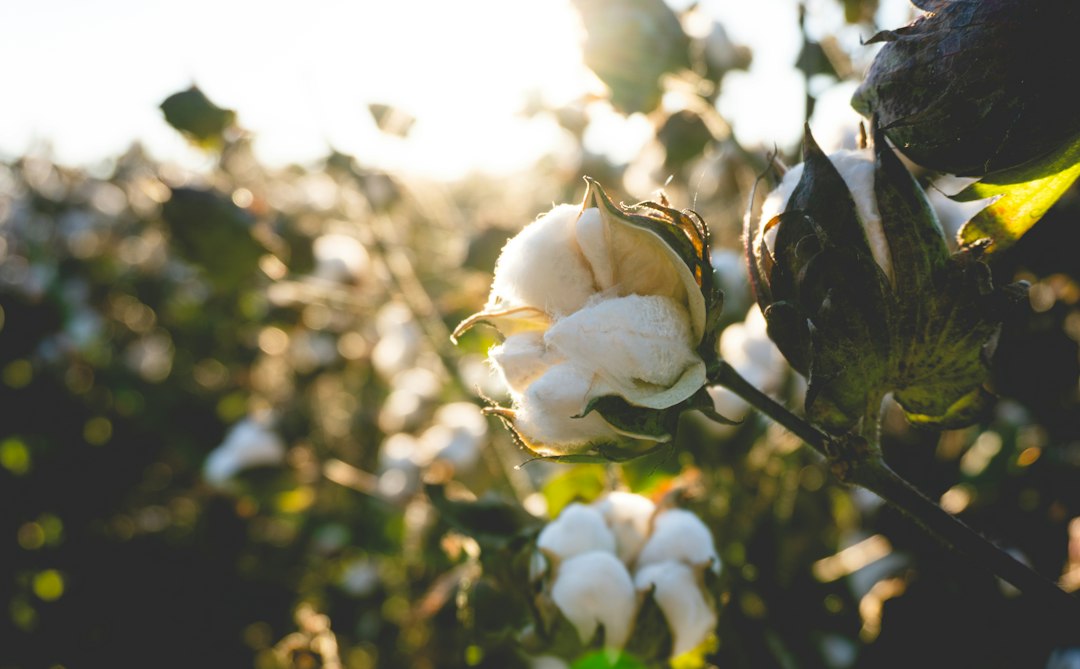
Cotton Species and Staple Length
The most important difference between cottons is staple length, the average length of the fibers in a sample or bale.1 Longer fibers can be spun into finer, smoother yarns, which give a softer, more lustrous fabric.
Four species of cotton are commercially important: upland cotton (Gossypium hirsutum), extra-long staple cotton (G. barbadense), tree cotton (G. arboreum), and Levant cotton (G. herbaceum).1
Upland Cotton
Most of the world’s cotton is upland cotton. It is a medium-staple cotton, with fibers about 1.3 to 3.3 centimeters long,1 and in the United States it makes up about 97% of the crop.2 Most everyday cotton clothing is made from it.
Extra-Long Staple Cotton
The longest, finest cottons have staples of about 2.5 to 6.5 centimeters. They are the least plentiful and most difficult to grow, and they are used mainly for fine fabrics and yarns. This group includes Sea Island, Egyptian, and Pima cottons.1
Pima cotton (G. barbadense) has fibers 1⅜ inches (about 3.5 centimeters) or longer. It makes up about 3% of U.S. cotton production and is used for high-end apparel and sewing thread.2 Supima is the brand name for American-grown Pima cotton, promoted by the Supima organization since 1954; the name blends “Superior” and “Pima.”3 Egyptian cotton is cotton grown in Egypt, which is known for its long-staple varieties.
Recycled Cotton
Recycled cotton is recovered from cutting-room scraps or used textiles, which are shredded back into fiber. Shredding shortens the fibers, so recycled cotton is often blended with new cotton or other fibers to make a strong yarn.
How the Yarn Was Processed
Combed cotton goes through an extra combing step after carding that removes shorter fibers, giving a smoother, finer yarn. Ring-spun cotton is spun with a method that twists the fibers tightly, making a soft, strong yarn often used in T-shirts.
Mercerized cotton has been treated with sodium hydroxide (caustic soda), usually under tension. Mercerizing gives cotton a greater affinity for dyes, more strength, and usually more luster.4
What It Means on a Label
The fiber content label lists all of these simply as cotton or organic cotton, with a percentage. Names like Pima, Supima, combed, and ring-spun usually appear in the product description instead. On FiberScore, you can browse cotton clothing and see each item’s cotton content.
Some brands name the cotton type in the product name. KENT and MATE the Label make T-shirts in organic Supima or Pima cotton and list GOTS certification on them, Lady White Co. makes Pima cotton T-shirts, Lake Pajamas makes pajama sets in Pima cotton, and Jamie Kay makes kids’ clothing in Pima cotton. On the fiber content label, all of them read 100% cotton or 100% organic cotton.
References
Britannica Editors. (2026). Cotton. Encyclopaedia Britannica. https://www.britannica.com/topic/cotton-fibre-and-plant
USDA Economic Research Service. (2025). Cotton Sector at a Glance. https://www.ers.usda.gov/topics/crops/cotton-and-wool/cotton-sector-at-a-glance
Supima. (n.d.). Supima Cotton. https://supima.com/
Britannica Editors. (2026). Mercerization. Encyclopaedia Britannica. https://www.britannica.com/technology/mercerization