Wool, Merino, Cashmere, and Other Animal Fibers: What's the Difference?
November 16, 2026 · 9-minute read
Wool, merino, cashmere, alpaca, mohair, and camel hair are all fibers from animal fleece or hair. Wool comes from sheep, and merino is a breed of sheep. Cashmere, alpaca, mohair, and camel hair come from goats, alpacas, and camels, and belong to a group known as specialty hair fibers.1 They differ in the animal they come from, how fine their fibers are, and how they can be named on a label.
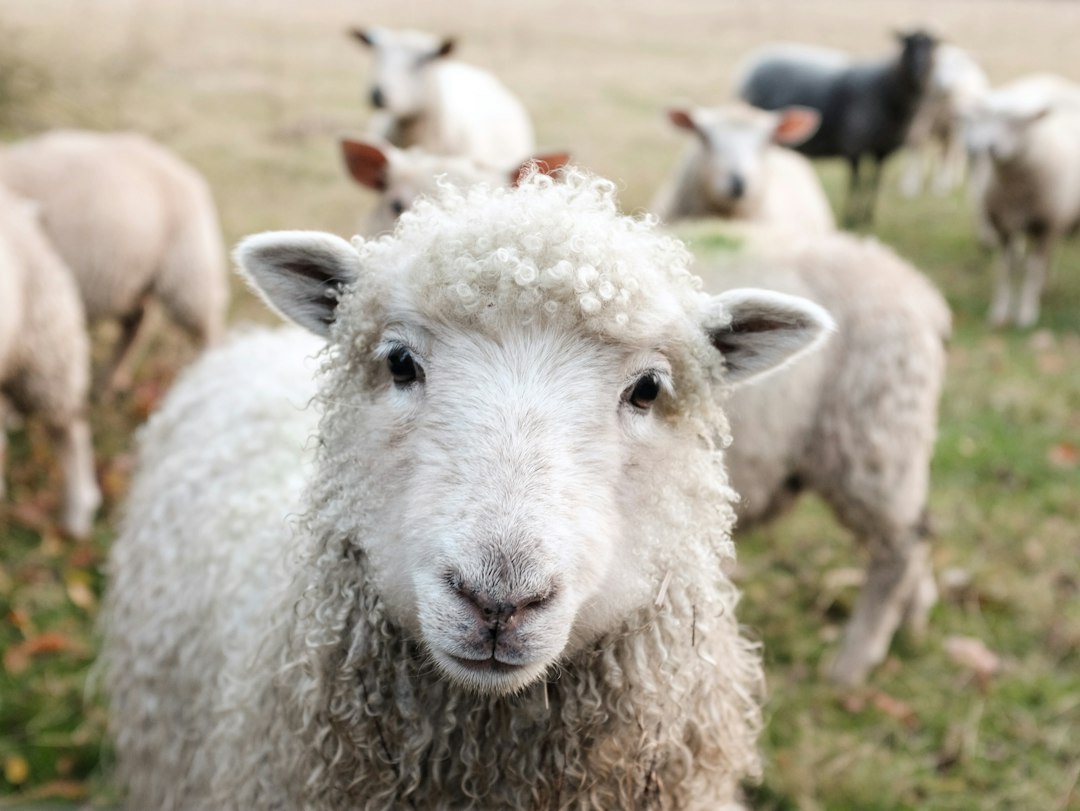
Sheep’s Wool
Wool is a natural, protein-based fiber grown by sheep. It is made of keratin, the same protein found in human hair, and its outer layer is made of overlapping scales that sit in a stacked formation like roof shingles. Wool fibers are crimped, and the crimp helps trap still air between the skin and the fabric. Wool can also absorb and hold liquid moisture, including sweat.2
Merino
Merino wool comes from Merino sheep, which grow a new fleece each year. Wool fibers are measured by their diameter in microns (millionths of a meter), and merino fibers typically range from less than 17.5 microns to about 22 to 24 microns. Finer fibers bend more easily against the skin, which reduces the prickle associated with coarser wool, and fibers finer than about 19.5 microns are favored for garments worn next to the skin.2 By comparison, a human hair is roughly 50 to 100 microns. Australia is the best-known producer of merino, supplying most of the world’s superfine wool.3 Fine merino is used for base layers, T-shirts, socks, and lightweight sweaters.
Lambswool and Other Breeds
Lambswool is soft wool from a lamb’s first shearing, at around seven months old.4 It is common in knitwear. Wool from many other breeds is coarser than merino and is often used for heavier knits, tweeds, and outerwear, where a springy, textured yarn is the goal.
Specialty Hair Fibers
Cashmere
Cashmere comes from the fine, soft undercoat of the cashmere goat, called down. The goats also grow a straighter, coarser outer coat called guard hair. They molt over several weeks in spring, and the down is either combed out by hand or the goats are sheared. The raw fiber is then scoured and dehaired, which removes vegetable matter, dandruff, and the coarse guard hair. An average goat yields only about 0.1 to 0.2 kilograms of underdown, and significant suppliers include China, Mongolia, Afghanistan, and Iran.5 Cashmere from goats in China and Mongolia is about 14.5 to 16.5 microns in diameter, finer than the best wools, and a sweater takes the fleece of four to six goats.1
Alpaca
Alpacas are domesticated members of the camel family that live in the Andes, from southern Colombia to northern Chile and Argentina.6 Alpaca fiber ranges from about 15 to 36 microns depending on the grade, and alpacas come in more than 16 natural colors. Unlike sheep’s wool, alpaca fiber contains no lanolin, and it generally does not need to be dehaired.7
Mohair
Mohair comes from Angora goats. Angora wool is a different fiber that comes from Angora rabbits. Mohair is long, lustrous, strong, and resilient, and its scales lie almost flat, which gives it a fairly smooth surface. Angora goats are usually clipped twice a year,8 and South Africa produced about half of the world’s mohair in 2022.9
Camel Hair
Camel hair is the fine undercoat of the two-humped Bactrian camel. It is usually collected as the camel sheds its coat, then combed to separate the soft down from the coarse outer hairs. It is usually a reddish tan color and is mainly used for overcoat fabrics, knitwear, and blankets.10
Yak
Yak fiber is the fine down undercoat of yaks raised on the high plateaus of Central Asia. It is used in knitwear and accessories.
How Labels Name Them
Under the Wool Products Labeling Act, the term wool covers fiber from the fleece of sheep or lambs and the hair of the Angora goat, cashmere goat, camel, alpaca, llama, or vicuna. These specialty fibers may be labeled as wool or by their own names, such as cashmere or alpaca, and when a specialty fiber name is used, its percentage must appear on the label. Recycled wool is wool that has been woven, knitted, or felted into a product and then returned to a fibrous state. Wool and recycled wool must be listed by name and percentage even when they make up less than 5% of a product.11
In the United States, a fiber can be labeled cashmere only if it is the fine, dehaired undercoat of the cashmere goat, its average diameter is no more than 19 microns, and no more than 3% of the cashmere fibers by weight average more than 30 microns. The coefficient of variation around the mean may not exceed 24%. Fiber from cashmere goats that does not meet these criteria is labeled as wool.11
So a sweater labeled “100% wool” may be made of sheep’s wool or of a specialty fiber, while one labeled “70% wool, 30% cashmere” names each fiber. For more on fiber content labels, see How to Read a Clothing Fiber Content Label.
Washing Wool
Untreated wool can felt and shrink in the wash. When wool is exposed to heat and moisture, its scales lift, and with agitation they lock onto the scales of other fibers. This is irreversible and can shrink a garment. Machine-washable wool is treated so the scales do not interlock, by removing or smoothing them, by reducing friction between fibers, or by both. These treatments change the surface of the fiber, not its internal protein structure. Superwash is the industry term for wool given such a shrink-resist treatment. The most widely used is Hercosett, which applies a chlorine pretreatment and then a polyamide epichlorohydrin resin.12
The care label shows whether a wool garment can be machine washed.
How Fiber Animals Are Raised
Raising animals for fiber involves routine husbandry procedures, some of them surgical, and animals are eventually culled from the flock. These practices vary by country, farm, and certification, and they are part of how fiber is produced.
Mulesing
Mulesing is practiced on Merino sheep, mainly in Australia, to reduce the risk of flystrike, a condition in which blowflies lay eggs on soiled or wrinkled skin and the maggots feed on the sheep’s living flesh. Flystrike can be painful and fatal if untreated. Mulesing involves cutting crescent-shaped flaps of skin from around a lamb’s breech and tail with specialized shears, leaving smooth scar tissue that is less likely to attract blowflies. It is usually done when lambs are 6 to 10 weeks old, often without anesthetic, and pain relief after the procedure is not always used. Sheep can also be bred to resist flystrike, which can make mulesing unnecessary.13
Tail Docking and Castration
Lambs’ tails are commonly docked to reduce blowfly strike, and male lambs are commonly castrated, mainly for management reasons.14
Horn Removal
Some horned sheep and goats have their horns or horn buds removed, called dehorning or disbudding. The Responsible Wool Standard prohibits dehorning, disbudding, and substantial horn trimming in sheep unless needed to address animal welfare.15
Alpacas
In the Andes, alpacas are normally sheared every two years.6 For shearing, alpacas are commonly stretched out on the floor or a low table with their legs tied to wooden spacers while a handler holds the head.16 A study at the University of Veterinary Medicine, Vienna compared restraint methods and found that heart rate and other clinical values changed when alpacas were sheared on the floor or on a tilt table, but stayed normal when they were sheared standing. Levels of cortisol, a stress hormone, rose during restraint and shearing in every position.17
Male alpacas not kept for breeding are commonly castrated by a veterinarian.18 Adult males that are not castrated have large fighting teeth used in fights for dominance, and trimming them is one of the most common dental procedures for alpacas.19
Culling and Slaughter
Sheep are culled from wool flocks as they age,20 and some wool and cashmere comes from the skins of slaughtered animals.1,21 In Peru, alpacas are also slaughtered for meat,22 while Windrush Alpacas, a North American breeder, says alpacas in North America are not killed for their fleece or meat.23
Certifications for Animal Fibers
Several certifications apply to animal fibers at the farm level and follow the fiber through the supply chain, so a certified finished product can be traced back to certified farms.
Responsible Wool, Mohair, and Alpaca Standards
Textile Exchange runs a set of voluntary standards for animal fibers, including the Responsible Wool Standard (RWS), the Responsible Mohair Standard (RMS), and the Responsible Alpaca Standard (RAS). Each requires every site, from the farm through to the seller in the final business-to-business transaction, to be certified, and farms are evaluated against animal welfare, land management, and social requirements. Textile Exchange is combining these standards into a single standard for raw materials, the Materials Matter Standard.24
The Responsible Wool Standard prohibits mulesing and sets rules for castration, tail docking, pain relief, and slaughter.15
The Good Cashmere Standard
The Good Cashmere Standard was introduced by the nonprofit Aid by Trade Foundation. It covers the welfare of cashmere goats, the protection of nature, and the working conditions of farmers and farm workers, and it started with farms in Inner Mongolia, where farmers must prove compliance before they are certified.25
Global Organic Textile Standard (GOTS)
GOTS also covers organic animal fibers, including sheep’s wool, cashmere, mohair, alpaca, and silk, and applies to every processing step from fiber to finished product.26
Shopping by Fiber
Everlane lists the Responsible Wool Standard on its 100% merino sweaters, and Smartwool lists ZQ certification on its merino clothing, including pieces in 53% merino wool and 47% TENCEL Lyocell. Naadam, Naked Cashmere, and White + Warren make sweaters in 100% cashmere, and Peruvian Connection and Industry of All Nations make sweaters in 100% alpaca.
Because labels list each fiber by name and percentage, you can see which animal fibers a sweater is made of and how much of each. On FiberScore, you can browse wool, cashmere, and alpaca, mohair, and camel clothing.
References
Britannica Editors. (2026). Cashmere. Encyclopaedia Britannica. https://www.britannica.com/topic/cashmere
The Woolmark Company. (n.d.). What is the Wool Fibre? https://www.woolmark.com/fibre/what-is-the-wool-fibre/
The Woolmark Company. (2019). What is Merino wool & how is it made? https://www.woolmark.com/fibre/what-is-merino-wool/
Dictionary.com. (n.d.). Lamb’s wool. https://www.dictionary.com/browse/lambs%20wool
Cashmere and Camel Hair Manufacturers Institute (CCMI). (n.d.). Cashmere Facts. https://www.cashmere.org/facts.php
Britannica Editors. (2026). Alpaca. Encyclopaedia Britannica. https://www.britannica.com/animal/alpaca
Fuqua, R. (n.d.). Alpaca Fiber Characteristics. Alpaca Owners Association. https://www.alpacainfo.com/academy/article/4562/alpaca-fiber-characteristics
Britannica Editors. (2016). Mohair. Encyclopaedia Britannica. https://www.britannica.com/topic/mohair
Mohair South Africa. (2023). Press release: South African Mohair industry update – April 2023. https://mohair.co.za/mohair-blog/tag/clip+composition
Britannica Editors. (2018). Camel hair. Encyclopaedia Britannica. https://www.britannica.com/topic/camel-hair
Federal Trade Commission. (2014, updated 2025). Threading Your Way Through the Labeling Requirements Under the Textile and Wool Acts. https://www.ftc.gov/business-guidance/resources/threading-your-way-through-labeling-requirements-under-textile-wool-acts
The Woolmark Company. (n.d.). Machine Washable Wool. https://www.woolmark.com/industry/product-development/processing-innovations/machine-washable-wool/
RSPCA Australia. (2025). What is the RSPCA’s view on mulesing and flystrike prevention in sheep? RSPCA Knowledgebase. https://kb.rspca.org.au/knowledge-base/what-is-the-rspcas-view-on-mulesing-and-flystrike-prevention-in-sheep/
Australian Veterinary Association. (2016). Tail docking and castration of lambs and sheep. https://www.ava.com.au/policy/tail-docking-and-castration-of-lambs-and-sheep
Textile Exchange. (2021). Responsible Wool Standard 2.2. https://textileexchange.org/app/uploads/2020/08/RAF-101a-V2.2-Responsible-Wool-Standard.pdf
NSW Department of Education. (2026). Alpacas – husbandry. Animals in Schools. https://education.nsw.gov.au/teaching-and-learning/animals-in-schools/animals-in-schools-species/alpacas/alpacas-activities/alpacas-husbandry.html
University of Veterinary Medicine, Vienna. (2017). Shearing of alpacas is necessary, but also stressful. ScienceDaily. https://www.sciencedaily.com/releases/2017/05/170512100416.htm
Fostings Alpacas. (2022). Will castrating my alpacas stop them fighting? https://www.fostingsalpacas.co.uk/post/will-castrating-my-alpacas-stop-them-fighting
Quagliani, A. (2013). Fighting Teeth: a Primer for Alpaca Owners. Alpacas Magazine, Alpaca Owners Association. https://aims.alpacainfo.com/members/am/2013-herdsire/assets/basic-html/page-86.html
Farm Online. (2023). Nearly 90 per cent of 10 year old ewes carry lambs in age of production trial. https://www.farmonline.com.au/story/8141449/think-performance-not-age-in-ewe-selection/
Britannica Editors. (2026). Wool. Encyclopaedia Britannica. https://www.britannica.com/topic/wool
McKenna, J. (2019). Inside an Alpaca Slaughterhouse. New Worlder. https://www.newworlder.com/inside-an-alpaca-slaughterhouse-in-sibayo-peru/
Windrush Alpacas. (n.d.). Alpaca Facts & FAQ. https://www.windrushalpacas.com/faq
Textile Exchange. (n.d.). Responsible Wool Standard (RWS); Responsible Mohair Standard (RMS); Responsible Alpaca Standard (RAS). https://textileexchange.org/responsible-wool-standard/
FashionUnited. (2020). Aid by Trade Foundation introduces world’s first cashmere standard. https://fashionunited.uk/news/fashion/aid-by-trade-foundation-introduces-world-s-first-cashmere-standard/2020013047265
Global Organic Textile Standard. (n.d.). Global Organic Textile Standard (GOTS). https://global-standards.org/our-standards/gots