Synthetic Fibers in Clothing: Polyester, Nylon, Elastane, and Acrylic
October 30, 2026 · 6-minute read
Synthetic fibers are made from polymers built from chemicals that come mainly from petroleum or natural gas.1 Four of them account for most of the synthetic fiber in clothing: polyester, nylon, elastane, and acrylic.
The following is a summary of how synthetic fibers are made, how the four differ, where you will find them, the chemical hazards involved in producing them, and how certification applies.
How Synthetic Fibers Are Made
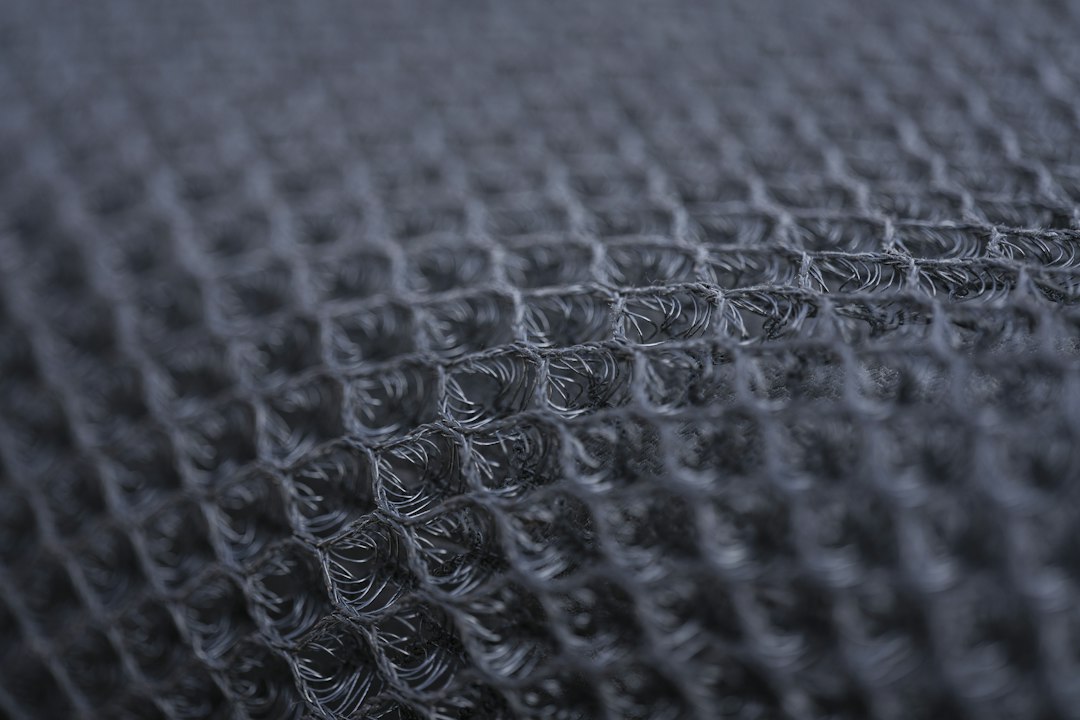
All four start the same way. Small molecules are linked into long polymer chains, and the polymer is then melted or dissolved and pushed through a spinneret, a device with small holes. It emerges as fine jets of liquid that harden into continuous filaments, a step called spinning.2
There are three main ways to spin a synthetic fiber. In melt spinning, the polymer is melted and extruded, which is the most economical method because there is no solvent to recover. In dry spinning, the polymer is dissolved and the solvent evaporates in a heated column as the fiber forms. In wet spinning, the dissolved polymer is extruded into a liquid bath where it hardens into fiber.2
The filaments are then drawn, or stretched to several times their length, which lines up the polymer chains and makes the fiber stronger. They can be used as continuous filament, or cut into staple fiber 2.5 to 15 centimeters long and spun like cotton or wool. Texturing adds crimps, loops, or coils, which changes how the finished fabric feels.2
Polyester
Polyester in clothing is almost always polyethylene terephthalate (PET), the same polymer used in clear plastic drink bottles,1 and it is melt spun, often at very high speeds.2 It is the most widely produced fiber in the world, making up about 59% of global fiber production in 2024.3
Polyester holds its shape, resists wrinkling and shrinking, and dries quickly. It appears in everything from athletic wear and fleece to linings, dresses, and blends with cotton. Recycled polyester is made from recovered PET, which is cleaned, melted, and spun again. It made up about 12% of polyester production in 2024, and it is still made mostly from plastic bottles.3
Nylon
Nylon is a family of polymers called polyamides, and labels may use either name. Nylon 6 and nylon 6,6 are the most widely used nylon fibers, and like polyester, they are melt spun.4 After nylon is spun, the filament may be drawn to as much as five times its original length.2 Nylon is strong, abrasion resistant, and smooth, and it is used in hosiery, swimwear, outerwear, activewear, and as a reinforcing fiber in socks and wool blends. Recycled nylon is made from recovered nylon, such as production waste, carpets, and discarded fishing nets. About 0.2 million tonnes were produced in 2024, around 2.3% of all nylon fiber.3
Elastane (Spandex)
Elastane, called spandex in the United States and sold under brand names such as Lycra, is made of at least 85% polyurethane by weight and is used for its highly elastic properties.5 It is one of the few specialty fibers still made by dry spinning.2 Elastane is almost never used on its own. Small amounts are blended with other fibers to add stretch, and larger amounts appear in leggings, swimwear, and shapewear.
Acrylic
Acrylic is made mainly from acrylonitrile. It is dissolved in a solvent and spun rather than melted,2 and it is usually cut into staple fiber and crimped to resemble wool. Acrylic is warm and lightweight and holds bright colors. It is common in sweaters, hats, scarves, and blankets, often blended with wool or cotton, and it can pill with wear.
Chemical Hazards in Synthetic Fiber Production
Extracting Oil and Gas
Synthetic fibers begin as oil and natural gas, and extracting them exposes workers to several hazards. OSHA lists hydrogen sulfide, hydrocarbon gases and vapors, crystalline silica, naturally occurring radioactive materials, and diesel exhaust among the health hazards of oil and gas extraction.6 Oil and natural gas production also releases benzene, toluene, ethylbenzene, and xylenes (BTEX), n-hexane, and other volatile organic compounds into the air, which the U.S. Environmental Protection Agency (EPA) notes can contribute to health problems for facility employees and nearby communities. These compounds also contribute to ground-level ozone, which can make breathing harder, particularly for children, older adults, and people with asthma.7
Benzene is the most studied of these. The U.S. Department of Health and Human Services, the EPA, and the International Agency for Research on Cancer (IARC) all classify it as a known human carcinogen. Long-term exposure can decrease the number of red and white blood cells and may cause leukemia.8
Making the Fibers
Each synthetic fiber also involves its own chemicals. Antimony trioxide is the main catalyst used to produce PET and polyester fibers, so workers in polyester production may be exposed to it, and IARC has classified it as possibly carcinogenic to humans.9 Acrylic is made mainly from acrylonitrile, which IARC classified in 2024 as carcinogenic to humans.10 Spandex is a polyurethane made in part from methylene diphenyl diisocyanate (MDI),5 and isocyanates can cause occupational asthma and other lung problems and irritate the skin.11
Why Safety Controls Matter
Because these chemicals are hazardous to workers and can affect nearby communities, safety and emission controls need to be in place at every stage, from the well to the fiber plant. Different certifications cover different stages.
Certifications from the International Organization for Standardization (ISO) can apply at any stage. ISO 45001 covers occupational health and safety management systems, and ISO 14001 covers environmental management systems. They are general standards that work for organizations of all sizes and are widely used in manufacturing and energy, so oil and gas producers, the chemical plants that make polyester and nylon, and fiber producers can all be certified to them. Both are worth looking for from fiber producers and, ideally, from the brands that use their fibers.12,13
The Zero Discharge of Hazardous Chemicals (ZDHC) program applies later in the supply chain. It covers textile, apparel, leather, and footwear manufacturing, including the chemicals used, how factories manage them, and what they release in wastewater, sludge, and air, which includes factories that dye and finish synthetic fabrics. It also has guidelines specifically for recycled polyester. It does not cover oil and gas extraction or the production of new polyester and nylon.14
The earliest stage is also the hardest to verify. A garment’s label and certifications rarely say where the oil or gas behind its fibers was extracted, so it is usually not possible to trace a synthetic garment back to the wells it came from.
For consumers, OEKO-TEX Standard 100 can verify that substance residues in the finished product are within its limits, but it tests the product, not the conditions in which it was made.15 What Are Rayon, Viscose, Modal, and Lyocell covers the same framework for plant-derived fibers.
Recycling Certification for Synthetic Fibers
Global Recycled Standard (GRS)
When polyester or nylon is labeled as recycled, the Global Recycled Standard, run by Textile Exchange, is one way that claim is verified. GRS sets requirements for third-party certification of recycled content and chain of custody, along with social and environmental practices and chemical restrictions. It applies to products containing at least 20% recycled material, and each stage of production must be certified, from the recycling stage to the last seller in the final business-to-business transaction.16
Synthetics on the Label
Synthetic fibers are listed by their generic names like any other fiber. A garment may be entirely synthetic, as many athletic shirts are, or include a small share for stretch or durability. On FiberScore, you can see the share of each fiber on every item, filter by any synthetic fiber, or set synthetic fibers to 0% to see items made without them. Browse clothing made with polyester, nylon, elastane, or acrylic.
References
Britannica Editors. (n.d.). Man-made fibre. Encyclopaedia Britannica. https://www.britannica.com/technology/man-made-fiber
Britannica Editors. (n.d.). Man-made fibre: Processing and fabrication. Encyclopaedia Britannica. https://www.britannica.com/technology/man-made-fiber/Processing-and-fabrication
Textile Exchange. (2025). Materials Market Report 2025. https://textileexchange.org/knowledge-center/reports/materials-market-report-2025/
Britannica Editors. (n.d.). Major industrial polymers: Heterochain polymers. Encyclopaedia Britannica. https://www.britannica.com/science/industrial-polymer/Heterochain-polymers
Britannica Editors. (n.d.). Spandex. Encyclopaedia Britannica. https://www.britannica.com/technology/spandex
Occupational Safety and Health Administration (OSHA). (n.d.). Oil and Gas Extraction: Health Hazards. https://www.osha.gov/oil-and-gas-extraction/health-hazards
U.S. Environmental Protection Agency (EPA). (n.d.). Oil and Natural Gas Production: Additional Information. https://archive.epa.gov/airquality/community/web/html/oil-gas_addl_info.html
Agency for Toxic Substances and Disease Registry (ATSDR). (n.d.). Benzene: ToxFAQs. U.S. Department of Health and Human Services. https://wwwn.cdc.gov/TSP/ToxFAQs/ToxFAQsDetails.aspx?faqid=38&toxid=14
CAREX Canada. (n.d.). Antimony Trioxide. https://www.carexcanada.ca/profile/antimony_trioxide/
International Agency for Research on Cancer (IARC). (2025). IARC Monographs Volume 136: Talc and Acrylonitrile. https://www.iarc.who.int/news-events/iarc-monographs-volume-136-full-volume-now-available
Occupational Safety and Health Administration (OSHA). (n.d.). Isocyanates: Overview. https://www.osha.gov/isocyanates
International Organization for Standardization (ISO). (n.d.). ISO 45001 Briefing notes. https://www.iso.org/standard/63787.html
International Organization for Standardization (ISO). (n.d.). ISO 14001 explained. https://www.iso.org/home/insights-news/resources/iso-14001-explained.html
ZDHC Foundation. (n.d.). Paving the way for sustainable chemical management within the fashion industry. https://www.roadmaptozero.com/
OEKO-TEX. (n.d.). OEKO-TEX® STANDARD 100. https://www.oeko-tex.com/en/our-standards/oeko-tex-standard-100
Textile Exchange. (n.d.). GRS-101 V5.0 Global Recycled Standard. https://textileexchange.org/app/uploads/2020/08/GRS-101-V5.0-Global-Recycled-Standard.pdf